

Priya sat at her kitchen table in Mumbai, staring at five different credit card bills and two loan statements. She felt overwhelmed and embarrassed. Then her colleague mentioned visiting a credit counsellor, and everything changed. Within weeks, Priya had a clear repayment plan and felt genuinely hopeful about her financial future.
If you’re facing similar challenges, you’re not alone. Thousands of Indians seek professional financial guidance every year, and it’s a smart, responsible decision.
Credit counselling is a structured service where certified advisers review your budget and create personalised repayment strategies. This isn’t just for people drowning in bills—it’s for anyone wanting better money management, clearer credit understanding, or realistic budget planning.
In India, these services operate through non-profit organisations, financial institutions, and certified independent counsellors. Sessions are confidential, non-judgemental, and typically begin with a free consultation.
This guide will show you exactly what happens during your sessions, which documents you’ll need, and the right questions that ensure you receive valuable support. Taking this first step shows financial maturity, and you’re already on the path towards regaining control.
Key Takeaways
- Credit counselling is a positive, proactive step towards financial health, not something to feel embarrassed about
- Services are available across India through non-profit organisations, banks, and certified independent counsellors
- Sessions are confidential and typically begin with a free one-hour consultation to understand your situation
- You’ll receive personalised budget reviews, repayment plans, and money management strategies tailored to your needs
- Gathering relevant financial documents beforehand helps maximise the value of your counselling session
- Professional guidance is beneficial for anyone wanting better financial control, not just those in severe financial difficulty
Understanding the Debt Counseling Process in India
The debt counseling process might seem mysterious or intimidating at first. But it’s actually a straightforward, supportive service designed to help you navigate your financial difficulties. Whether you’re dealing with mounting credit card bills, personal loans, or multiple EMIs that are stretching your monthly budget, professional debt counselling offers a structured pathway to regain control. Before you book your first appointment, it’s helpful to understand exactly what happens during these sessions and what you can realistically expect from your counsellor.
In India, the approach to debt counselling has evolved significantly over recent years. More people are seeking professional guidance instead of struggling alone with financial stress. Understanding what to expect from debt counselling will help you feel more confident and prepared when you take this important step towards financial wellness.
What Debt Counselling Involves
Debt counselling is a professional service where certified counsellors review your complete financial picture to create a realistic action plan. This isn’t just about looking at your debts in isolation. Your counsellor will examine all your income sources, including your salary, business income, rental income, or any other earnings you receive regularly.
During a debt management consultation, you’ll discuss all types of debts you’re carrying. This includes personal loans, credit card balances, home loans, vehicle loans, education loans, and any informal borrowings from friends or family. Your counsellor will also review your monthly expenses to understand where your money goes each month.
In India, debt counselling services are offered through various channels. You might find them at non-profit organisations, certain banks, financial wellness companies, and independent certified financial counsellors. The primary goal remains consistent across all providers: to help you manage and reduce your debt whilst maintaining your essential living expenses.
Your counsellor won’t just tell you to “spend less and save more.” Instead, they’ll work with you to identify realistic changes you can make. They’ll help you prioritise which debts to tackle first, explore whether you qualify for lower interest rates, and create a budget that actually works for your lifestyle and family commitments.
How a Typical Debt Counselling Session Works
Understanding the debt counseling process begins with knowing what happens during your appointment. Most initial counselling sessions last between 45 to 90 minutes. You can typically choose how you’d like to meet: in person at the counsellor’s office, over the phone, or via video call—whichever feels most comfortable for you.
The session usually follows a structured flow. First, your counsellor will ask what prompted you to seek help. There’s no judgement here; they simply want to understand your specific situation and concerns.
Next, you’ll review all your financial documents together. Your counsellor will look at your income statements, bank statements, loan documents, and credit card bills. This thorough review helps them see the complete picture.
Then comes the analysis phase. Your counsellor will compare your income against your expenses, identifying areas where you might reduce spending without compromising your quality of life. They’ll examine your debt obligations carefully, paying special attention to interest rates you’re currently paying.
After the analysis, your counsellor will present options tailored to your situation. These debt management consultation tips might include:
- Restructuring your budget to free up money for debt repayment
- Consolidating multiple debts into a single loan with a lower interest rate
- Negotiating with creditors for better repayment terms or reduced interest rates
- Creating a formal debt management plan with scheduled payments
- Exploring balance transfer options for credit card debt
Your counsellor won’t judge your past financial decisions. Instead, they’ll focus entirely on practical solutions that can work for you moving forward. The tone throughout the session remains supportive and constructive.
What to Expect from Your Debt Counsellor
When you work with a professional debt counsellor in India, certain standards and practices should be in place. Knowing what to expect from debt counselling helps you identify reputable professionals and avoid scams.
Confidentiality is key. Your counsellor won’t share your financial information with anyone without your permission. Everything you discuss remains private and protected.
You should receive personalised advice based on your specific circumstances. Generic solutions rarely work because everyone’s financial situation is unique. Your counsellor should take time to understand your income patterns, family obligations, financial goals, and personal preferences before recommending any course of action.
Expect clear explanations of all your options. Your counsellor should outline the pros and cons of each approach, helping you make informed decisions. They should also provide realistic timelines for debt repayment—no false promises about eliminating all debt overnight.
| What Professional Counsellors Will Do | What Professional Counsellors Won’t Do | Red Flags to Watch For |
|---|---|---|
| Provide confidential, judgement-free consultations | Share your information without permission | Refusing to explain their credentials or certification |
| Offer personalised solutions based on your situation | Pressure you into programmes you can’t afford | Demanding large upfront fees before any service |
| Explain all options with honest pros and cons | Make unrealistic promises about debt elimination | Guaranteeing specific outcomes or credit score improvements |
| Provide transparent fee structures upfront | Charge hidden fees or commissions without disclosure | Pushing only one solution without exploring alternatives |
| Offer ongoing support and follow-up guidance | Disappear after collecting fees | No physical address or verifiable contact information |
If you enrol in a debt management programme, your counsellor should provide ongoing support. This might include regular check-ins, adjustments to your plan as circumstances change, and guidance when unexpected financial challenges arise.
Transparency about fees is essential. Reputable counsellors will clearly explain any costs involved before you commit to anything. Many non-profit organisations in India offer free initial consultations, whilst others charge nominal fees. Be cautious of counsellors demanding large upfront payments before providing any service.
Your counsellor should also be honest about what they cannot do. They won’t magically erase your legitimate debts. They cannot force creditors to accept settlement offers. They shouldn’t guarantee specific outcomes, as many factors in the debt counseling process depend on your creditors’ policies and your own commitment to the plan.
Working with certified, reputable counsellors in India makes all the difference. Look for professionals who hold recognised certifications in financial counselling or credit management. Check their credentials, read reviews from previous clients, and verify their registration with relevant professional bodies.
Remember that legitimate counsellors focus on education and empowerment. They’ll teach you skills to manage money better, help you understand how credit works, and equip you with strategies to avoid falling into debt again in the future. This educational component is just as valuable as the immediate debt relief plan.
How to Prepare for Debt Counseling: Your Preparation Checklist
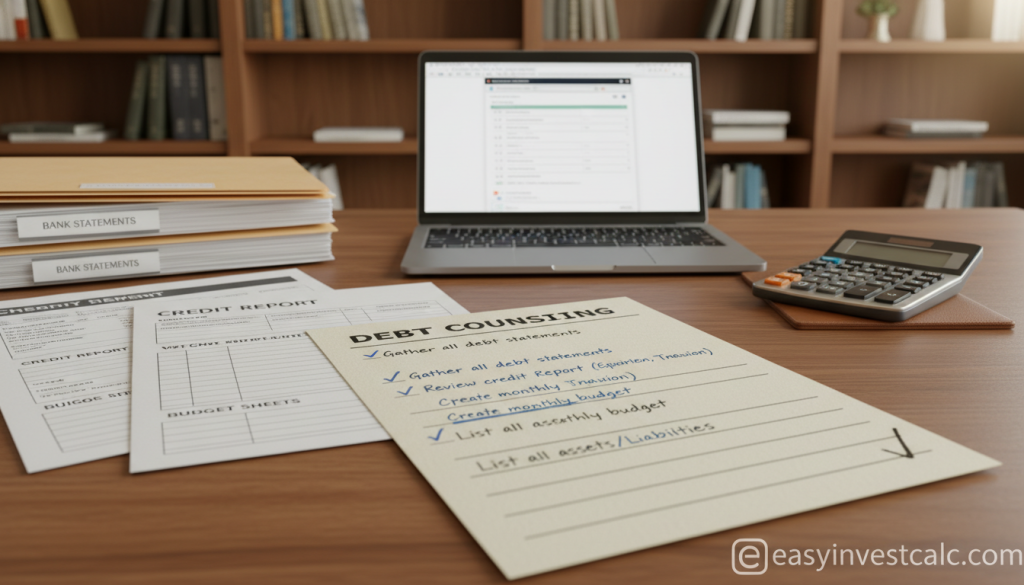
Getting ready for debt counseling can change your financial path. Even if you’re not fully prepared, your counselor can help. But, having your financial info ready makes your session more productive and effective.
Your counselor is there to help, not judge. Being prepared shows you’re serious about changing your finances. This lets your session focus on finding solutions, not just gathering info.
Gather All Your Financial Documents
Having all your financial documents is key for effective counseling. This lets your counselor give you tailored advice based on your situation.
You don’t need every document before your meeting. Do what you can, and your counselor will help with the rest by checking your credit report.
Start with your income documents. If you’re employed, bring your last three to six months of salary slips. Self-employed people should have business income statements or tax returns.
Bank statements for the last three months are also important. They show your spending habits and help your counselor understand your finances.
Include all income sources in your budget:
- Rental income from properties you own
- Freelance earnings or side business income
- Investment returns from mutual funds or dividends
- Family support or financial assistance from relatives
- Any irregular income you receive periodically
Your counselor needs this info to calculate your debt-to-income ratio. This ratio shows how much you can afford to pay towards debts each month.
Loan Agreements and Credit Card Statements
Collect all your loan documents, including home and personal loans. Note down the outstanding amount, interest rate, monthly payment, and remaining tenure for each loan.
Credit card debt is also important, with interest rates up to 42% in India. Gather your recent statements to show current balances, minimum payments, interest charges, and any penalties.
Organise your debt information in a simple format:
| Debt Type | Lender Name | Outstanding Amount | Interest Rate | Monthly Payment |
|---|---|---|---|---|
| Home Loan | HDFC Bank | ₹25,00,000 | 8.5% | ₹22,500 |
| Personal Loan | ICICI Bank | ₹3,50,000 | 12% | ₹8,200 |
| Credit Card | SBI Card | ₹85,000 | 36% | ₹2,550 (minimum) |
| Vehicle Loan | Bajaj Finance | ₹2,10,000 | 10.5% | ₹6,800 |
Also, mention any debts to family or friends. These debts might not show on your credit report but affect your finances.
Monthly Expense Records
Tracking your spending is key for a realistic budget. List all your monthly expenses, including rent, utilities, groceries, and transportation.
Don’t forget important categories:
- Insurance premiums (health, life, vehicle)
- Children’s education fees and related expenses
- Healthcare expenses and medications
- Discretionary spending on entertainment, dining out, and subscriptions
- Clothing and personal care items
Use banking apps or expense tracking apps for a month before your session. A simple notebook works too. The goal is to be accurate, not perfect.
List All Your Debts and Creditors
Make a list of all your debts. Include the creditor’s name, account number, total amount owed, interest rate, monthly payment, and due dates.
This might seem overwhelming. But facing your debt is the first step to freedom.
Get your credit report from CIBIL, Experian, Equifax, or CRIF High Mark in India. You’re entitled to one free report per year from each bureau. Your credit report can reveal debts you forgot about or didn’t know were open.
Having your info ready saves time. Your counselor can focus on solving your financial problems.
Define Your Financial Goals
Preparing for debt counseling is more than just paperwork. Think about your financial future. This helps your counselor create a plan that meets your needs.
Before your session, consider these questions:
- Do you want to be debt-free in a certain time, like three years?
- Are you saving for big goals like a home or education?
- Do you want to improve your credit score for better loans?
- Are you building an emergency fund to avoid debt?
- Do you want to change how you handle money?
Sharing your goals with your counselor helps them understand what matters to you. A plan that fits your values and goals is more likely to succeed.
Your goals may change as you progress. That’s okay. Starting with some idea of where you want to go is important. Your counselor will help refine these goals into achievable steps.
This preparation process is about empowerment, not judgment. Every document and goal brings you closer to financial peace.
Questions to Ask a Debt Counsellor During Your Session

Going into a debt counselling session with questions shows you’re serious about your finances. It’s smart financial practice. Your counsellor should be happy to answer your questions and help you make informed decisions.
Preparing questions beforehand makes your session more productive. It helps you see if the counsellor is right for you. Good questions show the counsellor’s expertise and commitment to your success.
Essential Questions About Debt Management Solutions
The strategies your counsellor suggests are key to your financial recovery. You need to know what options are available and how they’ll affect you. Ask specific questions to understand their analysis and recommendations for your situation.
What specific debt management options are available for my situation? Your counsellor should explain the options, like budgeting, debt consolidation, or settlement negotiations. They should tailor their advice to your income, debt, and goals.
How will this solution affect my credit score and credit history? Get honest about the possible effects. Some methods might lower your score before improving it. Knowing this helps you make better choices.
More important questions to ask a debt counsellor include:
- What are the advantages and disadvantages of each option you’re recommending? Good counsellors will discuss both sides openly.
- How long will it take to become debt-free with this approach? You deserve realistic timelines based on your finances.
- Will you be negotiating with my creditors on my behalf? If so, ask what they can achieve with creditors.
- Are there any risks involved in the recommended approach? Understand legal risks, tax implications, and future credit impacts.
- What alternatives exist if this plan doesn’t work for me? Knowing your backup options is reassuring.
Be wary of counsellors who push one solution without reviewing your finances. Avoid those who make promises they can’t keep. These signs suggest they’re more interested in their business than your financial health.
Critical Questions About Counselling Fees and Credibility
Understanding costs and verifying qualifications are essential financial counselling questions. Reputable counsellors are transparent about fees and credentials. Don’t be shy about asking about money—it’s your financial future.
What are your fees for counselling services, and when do I need to pay them? Legitimate counsellors provide clear fee schedules upfront. They shouldn’t ask for large payments before service. Many non-profits in India offer free initial consultations or low fees after delivering value.
Are there any hidden fees or charges I should know about? Ask about setup fees, monthly fees, and other costs. Transparency in pricing shows integrity.
Your questions to ask a debt counsellor should also cover qualifications and credibility:
- If I cannot afford your fees, do you offer reduced rates or fee waivers? Many non-profits offer sliding scale fees based on income.
- What are your counsellors’ qualifications and certifications? Look for recognised certifications in financial counselling.
- Is your organisation registered or accredited with any regulatory bodies? In India, this might include registration with financial sector bodies.
- How long has your organisation been operating, and how many clients have you helped? Established organisations are generally more reliable.
- Can you provide references or testimonials from previous clients? Reputable organisations should offer some evidence of successful outcomes.
- How do you protect my personal and financial information? Ensure they have proper data security measures.
Watch for warning signs like counsellors who are evasive about fees or qualifications. Those who pressure you to sign up immediately without time to consider options are also problematic. If a counsellor cannot provide clear information about their credentials or becomes defensive when questioned, seek services elsewhere.
| Red Flags to Avoid | Green Flags to Look For | Your Action |
|---|---|---|
| Demands large upfront fees before service | Clear, written fee schedule provided first | Request detailed pricing documentation |
| Vague about qualifications or certifications | Displays recognised credentials openly | Verify certifications with issuing bodies |
| Pressures immediate decision-making | Encourages you to take time considering options | Take at least 24 hours before committing |
| Promises guaranteed outcomes with creditors | Provides realistic expectations and possibilities | Ask for success rates and typical outcomes |
| No clear privacy or data protection policy | Written confidentiality and security protocols | Request copy of their privacy policy |
Practical Questions About Implementation and Follow-Up
Understanding how recommendations will be implemented is key. Your questions should cover the mechanics of the plan, ongoing support, and what happens if things change. These details help you follow through on the strategies discussed.
What are the next steps after this session? Your counsellor should provide a clear action plan with specific tasks, deadlines, and responsibilities. Vague guidance is insufficient—you need concrete steps.
Will I have ongoing support, or is this a one-time consultation? Know if you’ll have access to your counsellor for questions as you implement the plan. Ongoing support significantly increases your chances of success, even when challenges arise.
Additional implementation questions to ask a debt counsellor include:
- How often should we meet to review my progress? Regular check-ins create accountability and allow for adjustments as your situation evolves.
- What happens if my financial situation changes unexpectedly? Life brings surprises like job loss or medical emergencies. Understanding the flexibility of any plan you commit to is critical.
- Will you be handling payments to creditors, or will I continue to pay them directly? Clarify the mechanics of any debt management plan and who maintains control over your money.
- How will I know if the plan is working? Establish measurable milestones and success indicators so you can track progress objectively.
- What resources or tools do you provide to help me stick to the plan? Ask about budgeting apps, educational materials, support groups, or other aids that reinforce success.
- What is your policy if I need to cancel or modify the service? Understanding your options if circumstances change protects you from being locked into unsuitable arrangements.
Throughout your session, maintain an attitude of curiosity and self-advocacy. These questions demonstrate financial intelligence. Reputable counsellors appreciate informed, engaged clients and will answer all your financial counselling questions patiently and thoroughly.
Trust your instincts during the consultation. If a counsellor makes you uncomfortable, cannot answer questions clearly, or pressures you into immediate decisions, it’s perfectly acceptable to seek a second opinion from another counselling service. Your comfort and confidence in the professional relationship are essential for successful debt management.
Remember that the best debt counsellors view questions as opportunities to build trust and demonstrate expertise. They understand that your willingness to ask detailed questions reflects your commitment to financial recovery. By coming prepared with these strategic questions, you transform your counselling session into a thorough evaluation of both your options and the counsellor’s competence to guide you towards a debt-free future.
Conclusion
Feeling nervous before your first debt counseling session is normal. Many in India feel the same when dealing with money troubles. But, most people leave feeling better and hopeful about their future.
Your debt counsellor is your ally in managing your debts. They look at your whole financial situation. This includes your income, spending, and goals. They make sure the plans are right for you.
Remember the steps to prepare for your session. Collect your financial documents and list all your debts. Having clear goals makes the session more productive. Asking questions ensures you understand what’s ahead.
Your counsellor won’t judge you for past money choices. They help you plan for a better future. You’re in charge of your financial decisions. They offer advice, but you decide what’s best for you.
Debt problems don’t solve themselves overnight. But, with help and a solid plan, you can get back on track. Many in India have overcome debt and found financial stability.
If debt is weighing you down, book a counseling session today. It’s a step towards a more secure and less stressful financial life. You don’t have to face this alone.
Frequently Asked Questions About Debt Counselling
What exactly is debt counselling and how can it help me in India?
Debt counselling is a service where experts review your finances. They help you make a plan to manage and reduce debt. In India, many non-profits, banks, and financial companies offer this service.
The goal is to help you control your finances and keep up with essential expenses. Your counsellor will look at your debt-to-income ratio and find ways to cut spending. They might also talk about consolidating debts or negotiating with creditors.
This service is not just for those in deep debt. It’s for anyone wanting to manage their money better, understand their credit, or find ways to pay off loans and credit cards.
How long does a typical debt counselling session last and what happens during it?
Sessions in India usually last between 45 and 90 minutes. They can be in person, over the phone, or via video call. Your counsellor will first ask why you’re seeking help.
Then, they’ll review your financial documents and analyse your income versus expenses. They’ll look for ways to reduce costs and discuss your debt obligations. They might suggest creating a budget, consolidating debts, or negotiating with creditors.
The session is a collaborative effort to find practical solutions for your situation. It’s not about judging your past financial decisions.
What documents should I bring to my debt counselling appointment?
To make the most of your session, gather all your financial documents. You’ll need proof of income, bank statements, and loan agreements. Also, bring your credit card statements and a list of monthly expenses.
Lastly, get your credit report from CIBIL, Experian, Equifax, or CRIF High Mark. This will help identify all your debts and understand your credit standing.
What questions should I ask my debt counsellor to ensure I’m getting good advice?
Ask about solutions, fees, and how they’ll help you. Ask about the options available for your situation and how they’ll affect your credit score. Also, ask about the advantages and disadvantages of each option.
Ask about the fees and when you’ll pay them. Find out if there are any hidden charges. Ask about their qualifications and if their organisation is registered with regulatory bodies.
Ask about the next steps and if you’ll have ongoing support. Find out how often you should meet to review progress. Also, ask what happens if your financial situation changes.
How much does debt counselling cost in India?
Fees vary depending on the provider and services offered. Many non-profits offer free or low-cost initial consultations. Banks and financial institutions might also offer reduced rates or free services for existing customers.
Independent counsellors charge consultation fees ranging from modest amounts to higher fees for more extensive services. Reputable counsellors provide clear, written fee schedules upfront. They should not demand large payments before providing any service.
If you cannot afford fees, ask about reduced rates or fee waivers. Many organisations offer financial assistance to those genuinely struggling. Be cautious of counsellors who are evasive about costs or who pressure you for immediate payment.
Will debt counselling affect my credit score?
The counselling session itself does not directly affect your credit score. It’s a confidential consultation. The actions you take after counselling may impact your score in various ways.
If you follow the counsellor’s advice and make consistent, on-time payments, your credit score will likely improve. If you enrol in a debt management plan, this may initially be noted on your credit report. Consistently meeting the plan’s payment schedule will demonstrate financial responsibility.
Conversely, if debt settlement is recommended, this can negatively impact your score. Always ask your counsellor how their recommended approach will affect your credit standing, both in the short and long term.
Can a debt counsellor negotiate with my creditors on my behalf?
Yes, many debt counsellors in India can and do negotiate with creditors on your behalf. They might negotiate for reduced interest rates, waived fees, extended repayment periods, or consolidated payment plans.
Success depends on your payment history, the creditor’s policies, and the reasonableness of the proposal. Reputable counsellors will be honest about what they can realistically achieve. Always ask about their experience negotiating with your specific creditors and what success rates they’ve achieved.
How do I know if a debt counsellor is legitimate and trustworthy?
Check several key indicators to identify trustworthy debt counsellors. Verify their qualifications and certifications from recognised institutions. Confirm their organisation is registered with relevant regulatory bodies or professional associations in India.
Established organisations with several years of operation and documented success are generally more reliable. Reputable counsellors provide transparent, written information about fees with no hidden charges. They offer free or low-cost initial consultations and never demand large upfront payments before providing service.
They should willingly answer all your questions, provide clear explanations of all options, and never pressure you to sign up immediately. Red flags include evasive answers about fees or qualifications, unrealistic promises, high-pressure sales tactics, and requests for payment before any service is delivered.
What’s the difference between debt counselling and debt consolidation?
Debt counselling is a professional advisory service where a qualified counsellor reviews your entire financial situation. They provide personalised guidance, education, and a strategic plan to manage and reduce your debts.
Debt consolidation is one specific debt management strategy that might be recommended during counselling. It involves combining multiple debts into a single loan, ideally with a lower interest rate or more manageable payment terms.
Debt counselling is the broader service that helps you understand all your options. Debt consolidation is a specific financial product or strategy you might use as part of your overall debt management approach.
How should I prepare emotionally for my debt counselling session?
Approach your session with honesty, openness, and self-compassion. Understand that seeking help is a sign of strength and financial maturity, not weakness or failure. Many people in India face debt challenges, and counsellors work with clients in all sorts of financial situations daily.
They won’t judge your past decisions but will focus on practical solutions moving forward. Be completely honest about your financial situation, even the uncomfortable details. This will help you receive better advice.
It’s natural to feel anxious, embarrassed, or overwhelmed, but remember that your counsellor is your partner in finding solutions. Come with realistic expectations—your financial situation didn’t develop overnight and won’t be resolved instantly. With professional guidance, a clear plan, and your commitment, meaningful progress is absolutely achievable.
What if I can’t afford to pay anything extra towards my debts right now?
This is exactly the kind of situation where debt counselling proves most valuable. If you genuinely cannot afford any additional payments, an experienced counsellor can help you explore several options.
They might identify expenses you hadn’t considered reducing, help you create a more realistic budget, or negotiate with creditors for reduced payments. They might also discuss whether any of your debts qualify for hardship programmes.
In some cases, if your financial situation is truly untenable with no immediate solution, your counsellor might discuss more serious options and their implications. The key is transparency—be completely honest about your income, expenses, and financial constraints so your counsellor can provide realistic guidance.
How often should I meet with my debt counsellor after the initial session?
The frequency of follow-up sessions depends on your specific situation and the type of service you’re receiving. For a one-time consultation, you might schedule a follow-up review in 3-6 months to assess your progress and adjust the plan as needed.
If you enrol in a formal debt management plan, you’ll typically have regular check-ins—perhaps monthly initially, then quarterly as you progress—to review your financial situation, discuss any challenges, and celebrate milestones. Some counselling services offer ongoing support with access to your counsellor via email or phone between scheduled appointments.
During your initial session, ask about the follow-up schedule and ongoing support structure. Regular accountability check-ins significantly increase your likelihood of successfully implementing your debt management plan, so don’t hesitate to schedule these even if they’re not automatically offered.
Can debt counselling help improve my credit score?
Yes, debt counselling can indirectly help improve your credit score by providing you with strategies and support to manage your debts more effectively. When you follow the guidance from your counselling session—such as creating a realistic budget, prioritising high-interest debts, making consistent on-time payments, and avoiding new unnecessary debt—your payment history improves, which is the most significant factor in your credit score calculation.
If your counsellor helps you negotiate reduced interest rates or more manageable payment terms with creditors, you’ll find it easier to make regular payments, which positively impacts your score over time. Counselling helps you avoid damaging credit behaviours like missed payments, defaults, or maxing out credit cards.
Remember, credit score improvement doesn’t happen overnight—it requires consistent positive financial behaviour over several months or years. Your counsellor can provide specific guidance on credit-building strategies tailored to your situation and help you monitor your progress through periodic credit report reviews.
What should I do if I disagree with my debt counsellor’s recommendations?
If you disagree with your counsellor’s recommendations, first ensure you fully understand their reasoning by asking clarifying questions. Sometimes what initially seems like unsuitable advice makes more sense once you understand the rationale and long-term benefits.
Express your concerns openly and honestly—a good counsellor will listen to your reservations and work collaboratively to find alternative approaches that you’re comfortable with. Remember that you remain in control of all decisions about your finances; your counsellor provides expert guidance and recommendations, but you choose which path to follow.
If after thorough discussion you feel the recommended approach doesn’t align with your values, goals, or practical circumstances, you’re perfectly entitled to seek a second opinion from another debt counselling service. Different counsellors may have different philosophies or specialisations, and finding one whose approach resonates with you is important for successful implementation. Trust your instincts whilst remaining open to professional advice that might challenge your assumptions—the best outcomes often come from balancing expert guidance with your own understanding of what’s realistic and sustainable for your situation.
Is the information I share with my debt counsellor confidential?
Reputable debt counsellors in India adhere to strict confidentiality standards regarding your personal and financial information. They should not share your information with credit bureaus, creditors, family members, or other third parties without your explicit permission.
At the beginning of your session, professional counsellors typically explain their confidentiality policy and may ask you to sign a privacy agreement outlining how your information will be used and protected. If you enrol in a debt management plan, you’ll need to authorise them to communicate with creditors about your accounts.
Always ask about data security measures—how your documents will be stored, who has access to them, and how long they’ll be retained. If a counselling organisation cannot clearly explain their confidentiality and data protection policies, consider this a red flag and seek services elsewhere. Your financial information is sensitive and personal, and you have every right to ensure it’s handled with appropriate care and security.