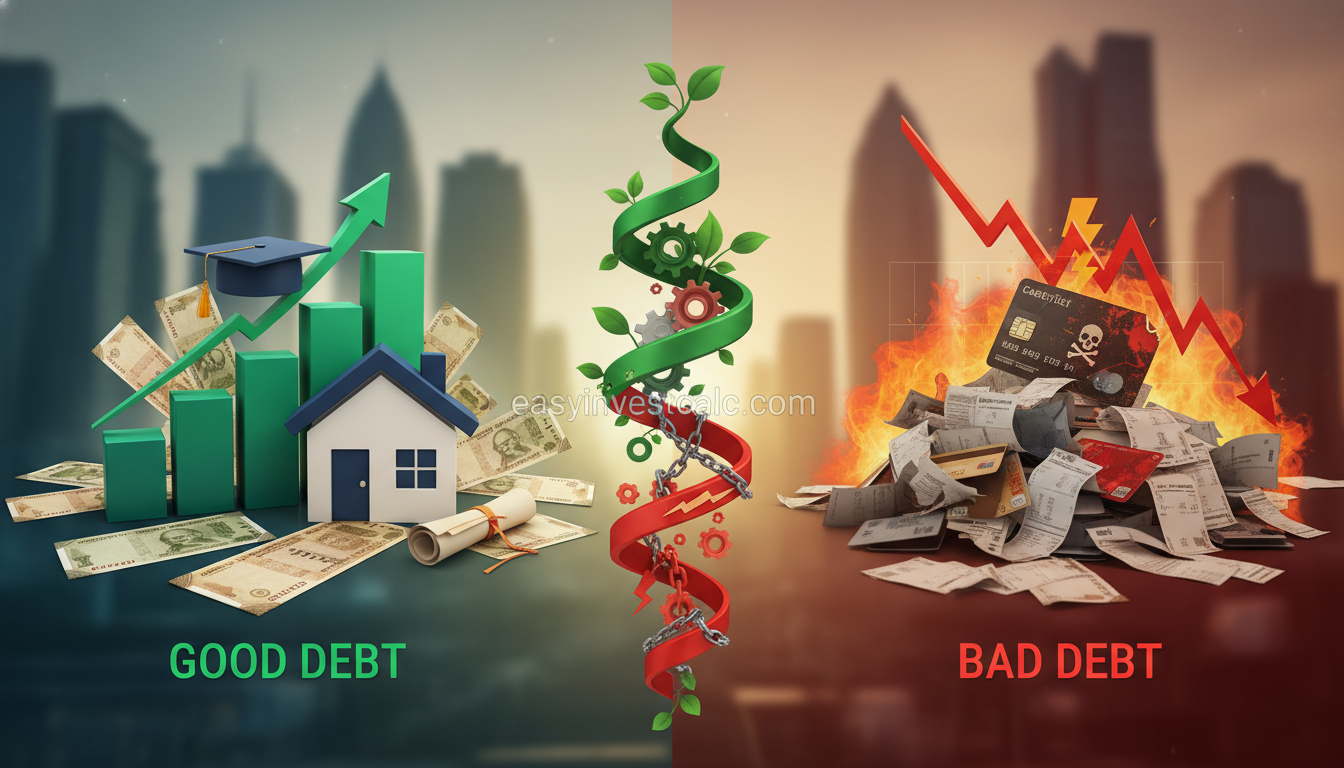
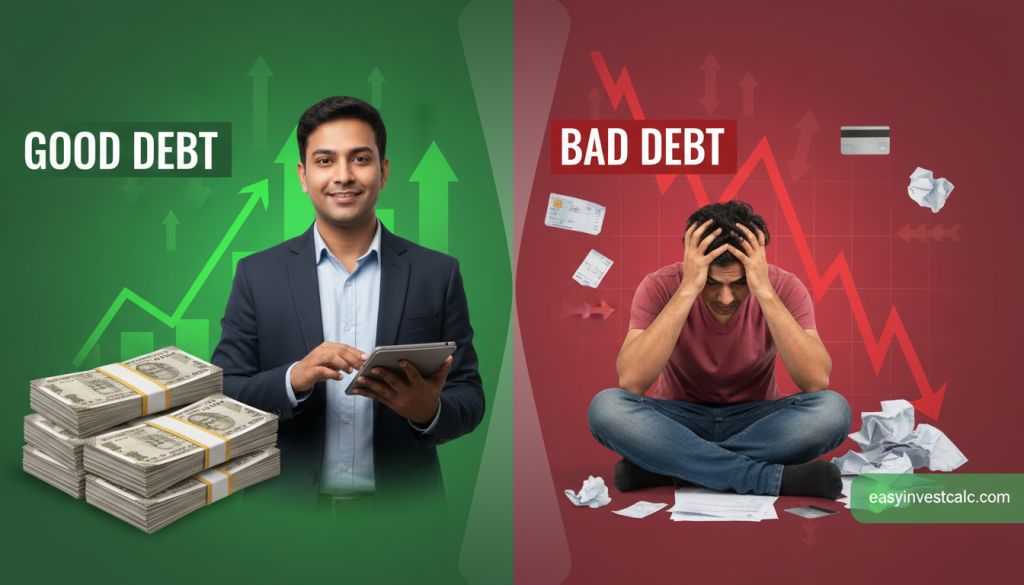
Rohan, a young professional in Mumbai, took a loan for his master’s degree. He saw it as a strategic investment in his future. On the other hand, his friend used a high-interest credit card for a luxury holiday. This shows how borrowing can either increase your wealth or reduce it.
It’s important to know the difference between good and bad debt for your financial future. Good Debt vs Bad Debt is more than just a theory. It’s a way to manage your money wisely in India. By knowing which debts help and which hinder, you can make informed decisions that match your goals.
This guide will help you understand personal finance better. We’ll look at how your borrowing habits affect your future wealth and peace of mind.
Key Takeaways
- Borrowing for assets that increase in value is usually a smart choice.
- High-interest debts for things that lose value can harm your net worth.
- Looking at your cash flow helps you see which debts are useful and which aren’t.
- Planning carefully lets you use credit to grow your wealth over time.
- Understanding your financial commitments helps you make better choices.
Understanding the Core Differences in Good Debt vs Bad Debt
Not all debt is the same, and knowing the difference is key to your wealth. When you borrow money, you choose your financial future. Understanding Good Debt vs Bad Debt helps you make choices that help, not harm, your goals.
Defining Good Debt: Investing in Your Future
Good debt is a strategic tool for growth. It has a low interest rate, often under 6%. This makes it affordable for financing assets that grow in value over time. For example, taking an education loan is a classic case.
Investing in your skills and qualifications can double your lifetime earnings. This borrowing increases your future income, making it a positive investment. Good Debt vs Bad Debt analysis shows that low borrowing costs mean you’re on the right track.
“Debt is a very dangerous thing, but it is also a very powerful tool if used correctly.”
Defining Bad Debt: The Burden of High-Interest Liabilities
Bad debt, on the other hand, is a financial weight that pulls down your net worth. It has high-interest rates on items that lose value quickly. Using credit cards for designer clothes, gadgets, or other discretionary spending is a bad debt example.
These liabilities don’t earn income or provide long-term value. Instead, they eat into your monthly cash flow with heavy interest. Spotting the difference between Good Debt vs Bad Debt is vital for solid finances. Staying away from high-interest traps is the best way to safeguard your money.
How Debt Impacts Your Financial Health and Credit Score
Every time you borrow money, you’re writing a report card for your future self. Your borrowing habits show how well you manage money. This affects how banks and lenders see you.
By handling your debts well, you keep your good name. This means you can get better interest rates later on.
The Role of Credit Utilisation in Your Credit Score
Lenders look closely at your credit utilisation ratio. This is how much of your available credit you’re using. Using all your credit can make you seem risky.
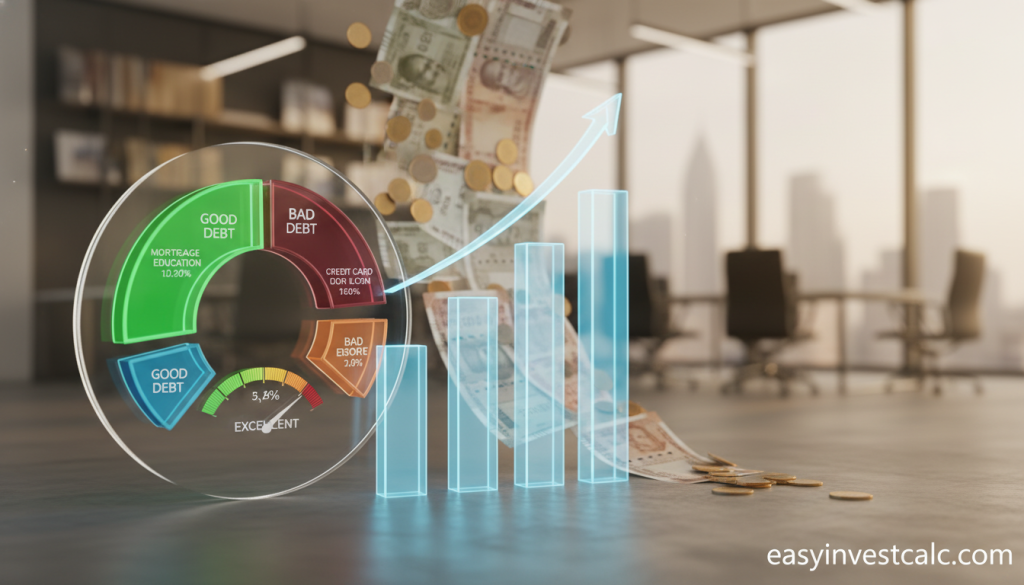
Keeping your utilisation ratio low is smart. Try to use less than 30% of your total limit. This shows you’re not too dependent on borrowed money.
It makes your financial health look stronger.
Why Consistent Repayments Matter for Long-Term Stability
Having a good reputation needs more than just low balances. It also needs consistent payments. Your payment history is key to your credit score.
Missing a payment can hurt your score a lot. It’s worse if you’re 30 days or more late.
Even one late payment can harm your score for a long time. Consistent, on-time repayments show you’re a reliable borrower. This helps you get loans or credit more easily in the future.
Analysing Common Types of Debt in the Indian Market
Understanding debt in India is key to managing your wealth. Some debts are strategic tools, while others can weigh heavily on your budget.

Home Loans and Education Loans as Strategic Investments
Mortgages are often seen as safe because they have lower interest rates. They help build equity in your home. This can lead to long-term financial security.
Education loans are also investments in your future. They can lead to better jobs and higher pay, making the initial cost worth it.
Credit Card Debt and Personal Loans: The Risks of High Interest
Credit card debt and personal loans have high interest rates. They can quickly eat away at your savings. These are dangerous liabilities if not paid off fully each month.
Using these for non-essential items means you’re paying extra. This can make it hard to keep your finances in check, if you use them for daily needs.
Identifying the Tipping Point Between Utility and Overspending
The danger point is when debt payments take too much of your income. Be careful if you’re using credit for basic needs or to pay off other debts.
True financial health means knowing when debt helps grow your wealth, not just fund a lifestyle. Keep an eye on your debt-to-income ratio to avoid being overwhelmed.
Strategies for Effective Debt Management and Consolidation
If you’re juggling many high-interest debts, it’s time to find smarter ways to take control. Debt management is more than just paying bills. It’s about finding a clear path to financial freedom. By acting now, you can reduce stress and improve your future.
When to Consider Debt Consolidation for Lower Interest Rates
Debt consolidation means combining several debts into one loan. This often lowers your interest rate or makes monthly payments easier. It simplifies your life by merging many due dates into one.
Think about this option if managing many creditors is hard. It streamlines your payments, helping you pay off the principal faster. Lowering your interest costs can save you a lot of money over time.
Utilising Debt Relief and Debt Counselling Services
Financial pressure can be overwhelming. Luckily, many debt solutions are available. Debt counselling connects you with experts who know the Indian financial scene.
These experts can help negotiate with lenders or create a repayment plan. They can also explore debt relief options when you feel overwhelmed. Don’t hesitate to seek help if managing your debt feels impossible.
Creating a Sustainable Repayment Plan That Fits Your Budget
A good plan starts with knowing your income and debts. List all your debts, including interest rates and minimum payments. This is the base of a sustainable repayment plan.
Put extra money towards the debt with the highest interest rate first. This approach saves you money in the long run while keeping your budget balanced. Consistency is key to becoming debt-free.
Steps to Becoming Debt Free and Building Wealth
Building wealth begins when you decide to tackle your debts with a plan. Getting debt free needs discipline and a focus on your financial goals. With a structured plan, you can grow your assets beyond just surviving.
Prioritising High-Interest Debt Using the Avalanche Method
The debt avalanche method is great for saving on interest. It involves listing debts and paying off the one with the highest interest rate first.
While paying the minimum on others, put as much as you can towards the most expensive debt. This method is better because it cuts down the total interest you pay. By clearing high-cost debts fast, you also protect your credit score from interest charges.
- List all your debts by interest rate.
- Pay the minimum on every account.
- Direct all surplus funds to the debt with the highest rate.
- Repeat until that debt is cleared, then move to the next.
The Importance of an Emergency Fund to Prevent Future Debt
Even when you’re working to become debt free, unexpected challenges can arise. An emergency fund is a financial safety net. It prevents you from needing high-interest credit cards for emergencies.
Try to save three to six months of living expenses in a high-yield savings account. This fund gives you peace of mind and keeps you from using credit cards. Keeping it up is key for your long-term stability and a good credit score.
Wealth building is a long journey, not a quick race. Combining fast debt repayment with a strong emergency fund lays a solid financial foundation for your future.
Conclusion
Controlling your borrowing habits is key to keeping your finances healthy. You now know how to spot assets that grow your wealth and liabilities that waste it.
Changing your borrowing habits takes time and effort. Even small steps, like managing your HDFC Bank credit card or SBI home loan better, can make a big difference. Sticking to these habits will help you achieve long-term success.
Begin by checking your current debts today. Aim to pay off high-interest balances while keeping your long-term goals in mind. This approach is vital for maintaining good financial health all your life.
Let us know about your journey to becoming debt-free. Share which strategies worked for you. Your stories can motivate others to manage their finances better.
FAQ
How can I distinguish between good debt vs bad debt when planning my finances?
To tell good debt from bad, look at the long-term value. Good debt, like an SBI Education Loan or an HDFC home loan, boosts your wealth. Bad debt, like using an American Express card for fancy clothes, doesn’t pay off in the long run.
How does my credit utilisation impact my credit score and overall financial health?
Your credit utilisation ratio is key to your credit score. High utilisation can signal financial stress to lenders like ICICI Bank. Keeping this ratio low shows you manage debt well, making you more attractive for better loans.
When is the right time to look into debt consolidation as a way to manage my loans?
Debt consolidation is a good idea if you’re juggling many high-interest loans. A single loan from Axis Bank can lower your interest rate. This simplifies payments and can save you money over time.
What are the benefits of seeking debt counselling or professional debt solutions?
Debt counselling from experts like Credit Vidya can change your life. They offer customised solutions and help you manage your finances. They can help you budget, negotiate with creditors, and get back on track.
How can I use the avalanche method to become debt free?
The avalanche method involves paying off debts with the highest interest rates first. Start with the highest interest debt, like a Standard Chartered credit card, and clear it. Then, use the money to tackle the next highest interest rate until you’re debt-free.
Why is an emergency fund essential for long-term debt management?
An emergency fund is your financial safety net. It helps you avoid high-interest loans for unexpected expenses. Having this fund keeps your finances healthy and helps you build wealth without falling into bad debt.